
About Gina Henschen, LPC

Compassionate. Down-to-Earth. Human.
Hello! Welcome. My name is Virginia Henschen, but most people call me Gina. My pronouns are she/her/hers. I’m so glad you’re here.
Whether you’re a therapy newbie or you’ve done this before, I want to commend you for prioritizing your health and well-being. It takes a great deal of courage to reach out for support, especially in a society that still views burnout, overworking, and self-sacrifice as a badge of honor.
I often (darkly) joke that it was my own mental breakdown that landed me in therapy and ultimately put me on the path to becoming a therapist myself. I was burnt out in my old career and generally very unhappy with many aspects of my life. After some deep soul searching and making some pretty radical changes, I can finally say that I’m doing what I’m meant to be doing. I would be honored to walk with you on your own journey towards wholeness.
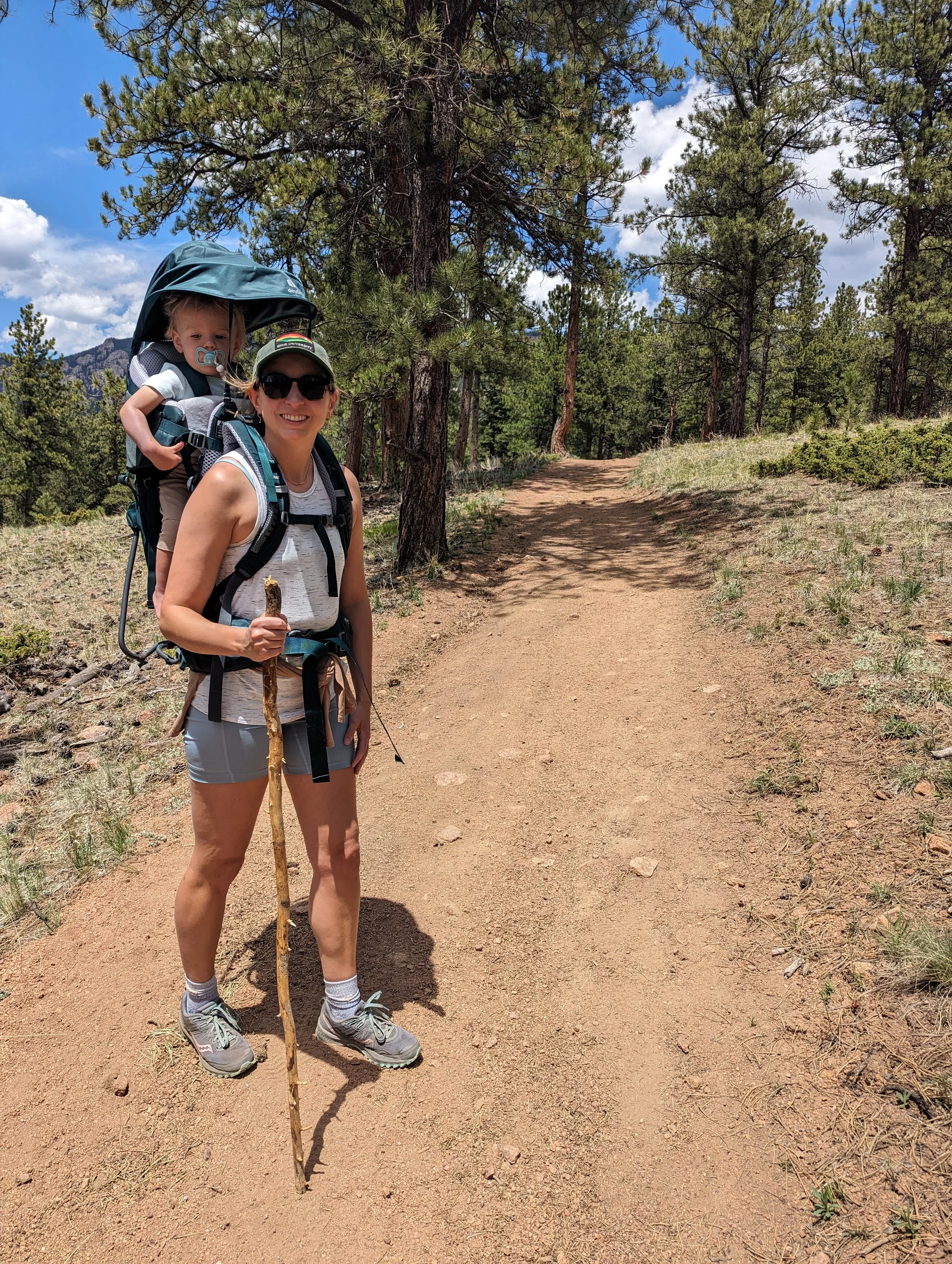
Outside of my practice, I am spending this season of life navigating the wild waters of motherhood. Prior to having kids, my weekends were spent doing all the typical Colorado outdoor activities – mainly climbing and skiing. These days, my adventures look a little different — scoping out the local playgrounds and conquering mountains of laundry versus actual mountains. But I wouldn't have it any other way, and I'm leaning into this slower-paced era of life. (Trying to, anyway!)
Areas of Focus and Interest

I am a Certified Clinical Trauma Professional and specialize in working with both single-incident and complex trauma. That being said, I also work with folx who are navigating depression, anxiety, and life transitions.
Here are some of the more specific populations I work with:
Adult children of dysfunctional families, alcoholics, and addicts
Survivors of religious/spiritual wounding
Survivors of sexual abuse/assault
LGBTQIA+
Perinatal concerns (pregnancy, postpartum, infertility, pregnancy loss)
Disordered eating/body image concerns

My Therapeutic Approach
I take an integrative approach to therapy, weaving techniques and interventions from various evidence-based modalities. Some of my faves include EMDR (Eye Movement Desensitization and Reprocessing), parts work/Internal Family Systems, Acceptance and Commitment Therapy (ACT), and good ol’ fashioned nervous system regulation strategies.
Based off of Dr. Judith Herman’s trauma recovery model, I conceptualize therapy as a four-step process:
-
We begin therapy by building an alliance with one another. We develop rapport and ensure that therapy feels like a safe place to tackle the deeper stuff.
-
Next, we focus on building skills for autonomic nervous system regulation and distress tolerance. I’ll encourage you to practice these on your own outside of session to help you learn how to respond instead of react in your day-to-day life. For many clients, this is enough to alleviate symptoms and we may not even need to revisit traumatic events. Yes, really!
-
When you are ready and in a safe body, we remember, mourn, and digest the past. We’ll really walk through this part together and ensure you come out the other side feeling more confident in yourself and the world at large.
-
After reprocessing trauma, clients often report feelings of empowerment and relief. How do you want to move forward from here? That’s what we’ll explore in this final step. Yay!
Credentials and Education
Licensed Professional Counselor (State of Colorado, LPC.0020611)
Certified Clinical Trauma Professional (Evergreen Certifications, 2026)
EMDR Basic Training (EMDR of the Rockies, 2022)
Master of Arts, Clinical Mental Health Counseling (The University of Colorado - Denver, 2021)
Bachelor of Science, Journalism (Ohio University, 2012)
Bachelor of Arts, Spanish (Ohio University, 2012)

“The curious paradox is that when I accept myself just as I am, then I can change.”
— Carl Rogers
